Probability inversion of time
We are used to believing that probability is derived from events. The question I keep asking is this. What if it’s the other way around? What if events are always derived from underlying probabilities? Nothing we know proves this to be wrong, and many things make it plausible. Not least of these is the fact that, if it is so, many of the more puzzling aspects of quantum physics make sense. It is not a conventional approach. It may be best described as a significant advance on pilot wave theory, but instead of being guided by some unknown forces, particles are groups of probability whose density varies with wave like frequency. If particles were derived from probabilities in this way there could be no measurement problem. Probability would be a wave and a particle would be a probability. It is not conventional to have it this way round, with probability first, but there is no logical reason not to do so, and many logical reasons for concluding that it may be the correct view. It is only weird if we have an issue with the idea that probability is ontological. Standard quantum calculation supports this, even if standard quantum interpretation does not.
It will be objected that the outcome of the double slit experiment stands in flat contradiction of any such view. Is this not evidence of particles prima facie? The answer must be that it is not the evidence we think it is. Clicks and flashes are gross effects and not directly observed quantum states. How could they be? They leave a map which might appear instant at macroscopic scale, but is accumulated over what at quantum scales is an immensely long period of time. The traces remain visible for a period which lasts some millions of times longer than the calculated journey of the particle itself. It is therefore an historical document. We are not observing particles – again, how could we be? – but a relatively longstanding record of detections. The way to explain this record is then to say it is a map of accumulated probability. As I like to point out, it is in many ways comparable to a goalkeeper’s penalty chart. There are no balls behind the goal. They are long gone. The chart shows where the next ball may go. In the same way there are no particles, and the slit experiment trace shows only where the next particle may and may not go.
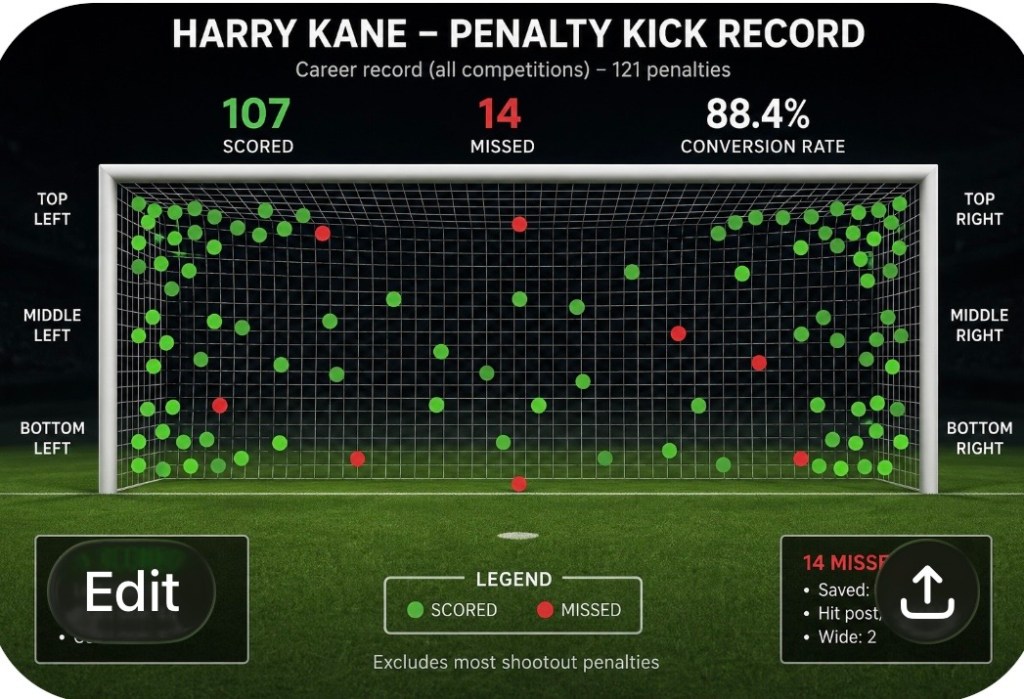
This inversion suggests more than simply a different way of thinking about the slit experiment, however. The frequency of probability amplitude wavelengths is determined in proportion to Planck’s constant. The probability amplitudes we calculate reveal a wave form, and the waves have a frequency which is predictable. This makes it plausible that a measure of quantum time might be a phase measurement across waves of probability. This known as Planck time, and it represents a consistent temporal value determined by Planck’s constant. What is not generally acknowledged is that it is an application of quanta to time. The resulting value would vary in steps (measured in femtoseconds) across each complete phase group of related probabilities. It would be a measure of frequency, and probability frequency would then be fundamental to time, rather than the other way around. The frequency could be considered to be a kind of building block of time. This is an inversion of conventional thinking, but it is based on the same basic quantum physics.
This is consistent with a position where probability is a priori, and it is logical that probability then determines not only position but time and sequence. If the objection is that we revert to the circularity of chicken and egg, the response is that the egg is invisible. If we can’t see the egg the chicken is a probability before it is a chicken. A quantum state is neither chicken nor egg, as it were. It is neither wave nor particle. This is a logical proof that probability exists a priori.
This proposal replaces the usual sequence
objects exist → objects change in time
with
changing probability amplitudes exist → the appearance of time emerges from their accumulated records.
That is a profound inversion of the conventional picture, and at least a very interesting one.

